
Sick, But Skinny
Navigating unseen health challenges, body image, and redefining what it means to be well in a culture obsessed with thinness

For the last year, I’ve been trying to live and function in a body that has felt like it’s slowly unraveling in ways I can’t control.
What started as a few subtle symptoms early last year quickly evolved into something that began to affect nearly every part of my daily life. Severe, ongoing digestive issues that led to nutrient deficiencies and intense abdominal pains, a persistent fatigue that no amount of sleep could cure, a constant, heavy brain fog that clouded my thinking and focus, and waves of depression I had never experienced before outside of withdrawal (more on that here). Alongside that was a kind of anxiety that felt sharper than usual, like I was always sitting just on the edge of panic.
With each week, new symptoms would emerge. Racing heart palpitations, moments of vertigo where I felt like I might pass out just from standing up, skin reactions and sensitivities that seemed to come out of nowhere. Things that had never been an issue before suddenly were. I was doing everything I could to maintain a healthy lifestyle, but nothing I tried seemed to make a difference.
I spent months trying to figure it out. Researching, tracking symptoms and patterns, cycling through different diets, cleanses, and protocols, eliminating foods and then reintroducing them, making lifestyle changes—trying to “fix” it from every possible angle. I went to doctors and practitioners of all kinds, each time hoping I’d finally get a clear answer, yet each time leaving with more questions than clarity.
Over time, it started to feel like I was trying to explain something I couldn’t fully prove. Like I was handing over pieces of a puzzle no one could quite put together, or that every practitioner had a different theory on.
As my health continued to decline, my quality of life did too. I stopped expecting to feel better anytime soon and started adapting instead. I was learning how to live inside a body that felt foreign, while trying to hold myself through a level of depression that felt like it was slowly wearing me down, all while navigating my first year of sobriety.
Eventually, things escalated. In February, I ended up in the emergency room with sharp, excruciating abdominal pain. As scary as that moment was, it set off a series of next steps, leading me to new doctors and more in-depth testing.
After a year of uncertainty, testing, and trying both holistic and conventional approaches, I finally received results last week that confirmed I’ve been dealing with a severe, long-term parasitic infection—one I most likely picked up during my travels last year, and one that, in hindsight, helps explain so much of what I’ve been experiencing.
Finally, An Answer
I felt a huge sense of relief. For the first time in a year, I had an answer. And in my mind, that meant there had to be a clear solution. It meant that I could finally exhale, stop searching, and start getting better.
But that relief hasn’t lasted in the way I expected.
I know this isn’t something that resolves overnight. I understand that my body needs time, and that there isn’t a quick fix after living with something that’s been wreaking havoc on my gut and body for so long.
Despite knowing that, I’ve found myself still getting frustrated.
I can feel how closely I’m observing everything—a kind of hypervigilance that has me analyzing every symptom and every shift, or more accurately, the lack thereof. I keep searching for any small sign of improvement, anything that might reassure me that things are actually getting better.
And when I don’t see that, I notice myself slipping into a familiar pattern: trying to manage everything more closely, do more, and force my body to do it “right”.
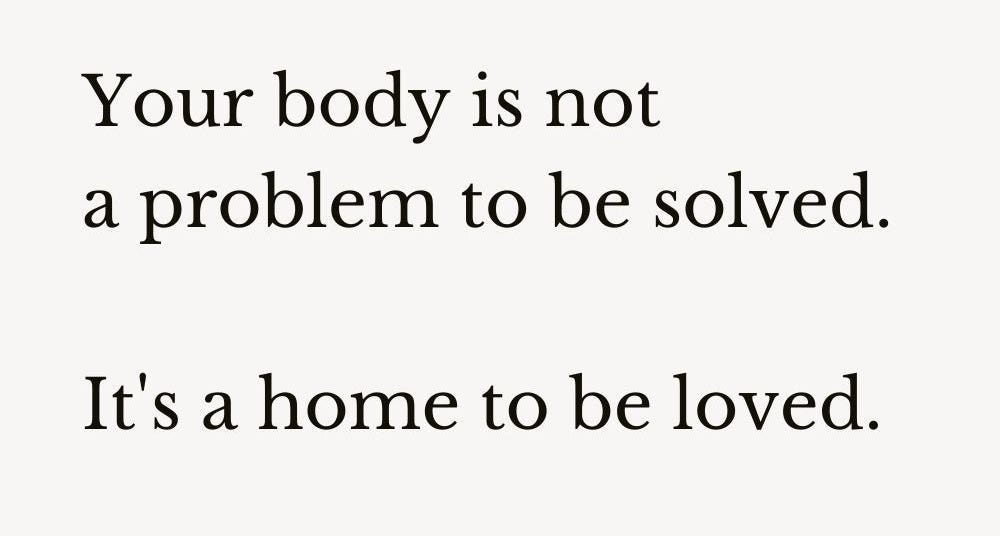
As if healing is something I can control if I just try hard enough.
Confronting Thoughts
What’s been even more disorienting is how little of this is visible from the outside.
By appearance, I look normal—healthy, even.
Over the past year, I’ve lost weight. Much of that naturally happened after rehab as my body recovered, but it continued to accelerate when I got sick, started struggling with my appetite and digestion, and wasn’t able to absorb the nutrients I needed. Because of that, I’ve gotten more feedback than ever about my body—more specifically, my weight. Comments about how “good,” “toned,” and “tiny” I look, or the opposite: “you’re looking too skinny,” “you’ve lost too much weight,” “you need to eat more.”
Each comment feels difficult to process, considering this is the unhealthiest I’ve felt in my life, outside of being in active addiction, and that a lot of this weight loss hasn’t felt intentional or fully within my control.
I know most of these comments come from a place of good intention, and that most people have no idea what’s actually going on beneath the surface. I don’t expect them to. We’ve all been conditioned to comment on other people’s bodies, especially in a society that places so much importance on being thin.
I’ve even caught myself doing it. I’m more conscious of it now, because I’ve seen how much that kind of feedback can shape the way I think about my own body, especially when it doesn’t reflect what’s actually going on inside.
This feedback, combined with my own internalized body image issues, makes what I’m about to say difficult to admit: part of me feels anxious that getting healthier might also mean gaining weight.
It feels like a shameful thought to have, especially considering everything my body has been through. But it also makes sense, given the way people have responded to me, an already thin person, losing even more weight.
I can’t help but wonder: will I look less “good,” less toned, less attractive if I get gain weight? Because getting healthy will most likely require gaining some weight, and it’s uncomfortable to admit how much that now scares me.
Deeper Roots
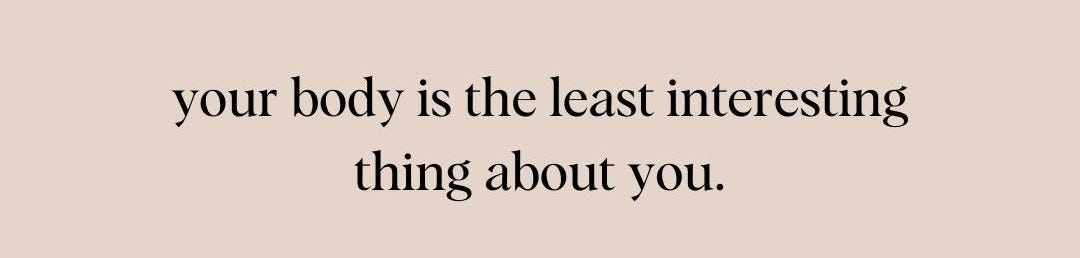
This whole experience has made me reflect more deeply on how easily we equate being smaller with being better, healthier, admirable, and more “well.” When in reality, so much of what I’ve been experiencing, and what so many others dealing with health issues go through, is happening behind closed doors. Completely invisible, and at times, all-consuming.
All of this has forced me to take a closer look at my relationship with my body, and how much of it has been shaped by a lifetime of trying to control it—through societal standards, more than two decades immersed in the dance world, and the belief that my body is something to manage rather than something to listen to.
It’s overwhelming to think about how big of a role this conditioning still plays in my life. The scary part is, none of what I, or so many of us, have learned is actually about caring for ourselves or our health. It’s about trying to make our bodies smaller.
One part of me is trying to support my body, nurture my health, and trust that it knows how to heal. Another part of me, a more familiar one, keeps trying to control it, force it, and “fix it,” while also clinging to a fear of gaining weight.
A Moment of Clarity
In writing this, I had a moment where I was brought to tears thinking about how much of my life I’ve spent trying to control, shame, and change my body—when in return, my body has done nothing but hold me through everything:
Through a 23-year dance career that demanded constant output.
Through years of overtraining, disordered eating patterns, binge drinking, addiction, injuries, illness, and more.
And yet, through all of it, it’s never stopped showing up for me.
It has allowed me to move, to travel, to explore, to dance, and to experience this life fully. Even in the many moments when I haven’t treated it with the same care, I still have a resilient body that continues to recover, adapt, and carry me through life
Healing From Here
This is uncomfortable for me to write about, and I’m not sure there’s a clear lesson here. More than anything, I just want to share it honestly, because as hard as this is to look at and admit, I have a feeling many people, especially women, can relate to it.
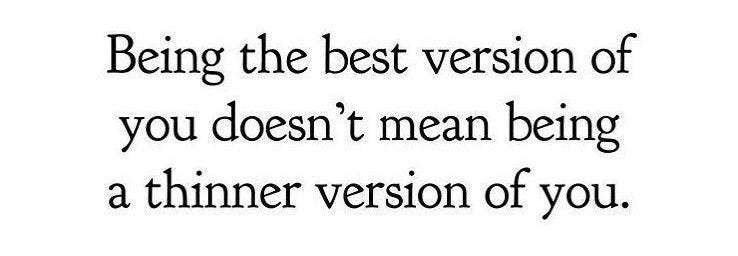
If anything, this experience has made me more aware of the complex way I relate to my body, how much of that has been conditioned over time, and how much of it I’m still in the process of unlearning and letting go of. It’s made me realize how much value we still place on thinness, even when it comes at the expense of someone’s actual wellbeing.
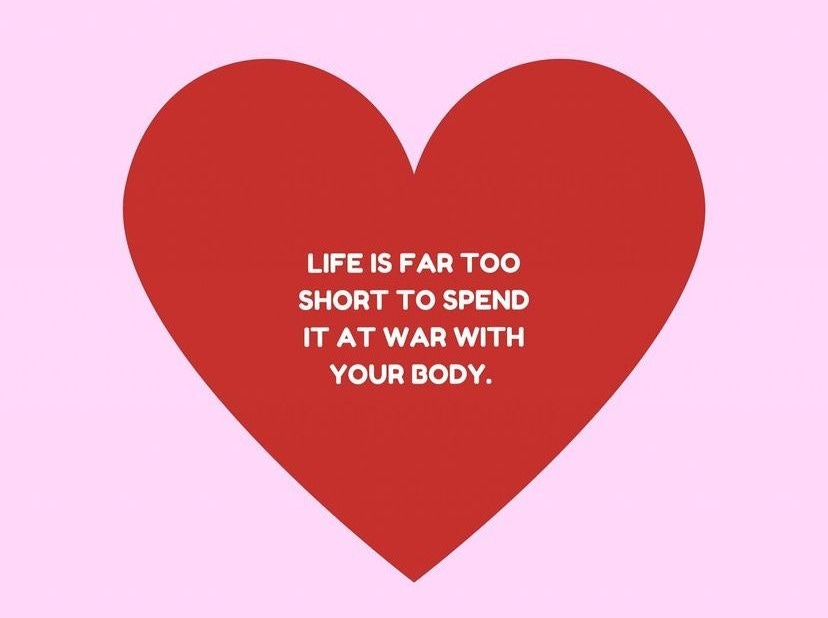
I know a lifetime of conditioning doesn’t disappear overnight. So for now, my intention is simply to approach my body with more awareness, patience, and care, trusting that it knows how to heal.
If any of this feels familiar, and you’re navigating your own complex relationship with your body or your health, my hope is that you can meet yourself with that same grace too.
You’re brave for sharing! I’m really praying for your health and hope you get a clear path of treatment and care 💕
♥️♥️♥️